

Traveling gluten free in Dublin is easier than you might expect.
Actually, let me say that another way: Ireland is one of the easier countries I’ve traveled to as a person with celiac disease.
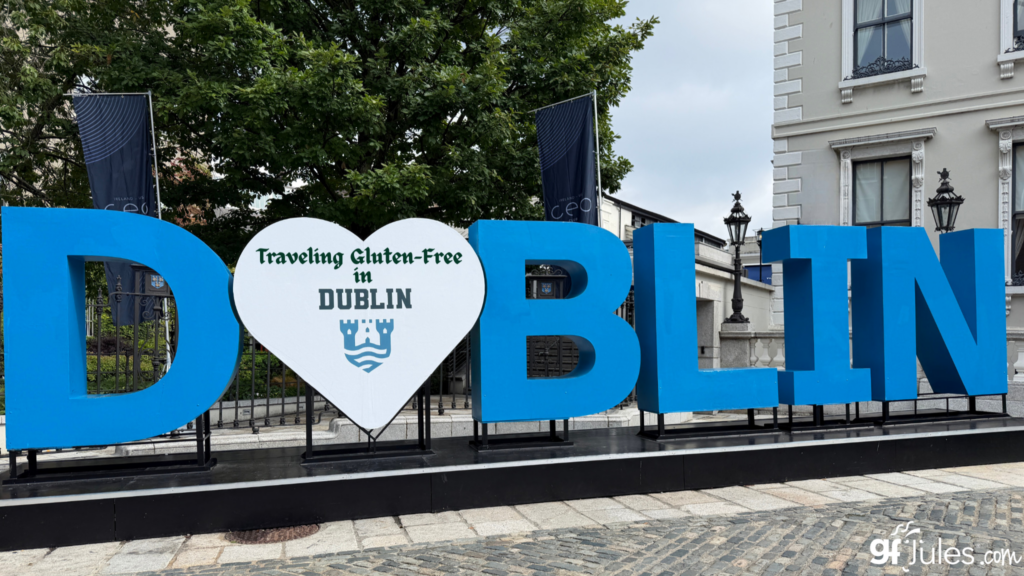
That doesn’t mean you can throw caution to the wind. You still need to know how to ask the right questions, understand how gluten free food is identified, and pay attention to cross-contact. But Ireland has something that makes a gluten free traveler’s life considerably easier: people generally understand what “coeliac” means, gluten free options are common, and restaurants often make it surprisingly easy to identify what you can eat.
And Dublin? It’s a particularly good place to start.
I’ve traveled gluten free in cities including Copenhagen, Amsterdam, Porto, Paris, Reykjavik, and London, and I’ve learned that the most useful travel advice isn’t simply a list of restaurants. Restaurants open, close, change menus and change chefs. What you really need is a strategy for finding safe gluten free food wherever your travels take you.
So that’s what this Dublin gluten free travel guide is really about.
I’ll share some of the places where I ate — including Millstone, Gallagher’s Boxty House, Jay Kay’s Cafe and Lemon Sugar, plus a surprisingly good gluten free find at Aviva Stadium — and even a stop at The Fig Tree in Kilkenny.
But more importantly, I’ll show you how to search for gluten free food in Dublin and Ireland, what to look for on an Irish menu, what “gluten free” really means to a traveler with celiac disease, and why Ireland may deserve a spot near the top of your gluten free travel list.
Is Ireland Gluten Free Friendly for People with Celiac Disease?
Yes. Very.
Ireland has a strong awareness of coeliac disease, and that matters enormously when you’re traveling with a medical need to avoid gluten.
One of the first things you’ll notice is the terminology: in Ireland, “coeliac” is the word you’ll see and hear rather than the American spelling “celiac.” And the Irish people are quite familiar with the seriousness of the affliction, as Ireland has one of the highest rates of coeliac disease of any country.
If you tell a server, “I’m coeliac,” you’re much more likely to communicate immediately that this isn’t simply a preference to skip bread or pasta.
Ireland also has an established Coeliac Society of Ireland, which provides resources for people with coeliac disease and has an Eating Out Pledge for restaurants and other food businesses. Participating businesses complete gluten-free training, agree to food-safety criteria, and can be listed as gluten-free caterers.
That doesn’t mean every restaurant in Ireland is automatically safe. It does mean that coeliac disease is not an obscure dietary request here.
What Does a Gluten Free Menu Look Like in Ireland?
One of the things I loved about eating in Ireland was that “gluten free” didn’t necessarily mean:
Here’s your salad. Good luck.
Instead, I frequently found that menus had gluten free choices clearly marked, and staff understood the difference between an allergy/intolerance and a medical need, and many restaurants could provide a separate coeliac menu.
And sometimes the gluten free menu was pleasantly comprehensive.
You may see:
- GF or gluten-free symbols next to menu items — many, many restaurants had full allergen menus where gluten was #1 on the call-outs
- a separate gluten free or coeliac menu
- allergen information accompanying menu items
- gluten free bread
- gluten free pasta
- gluten free pizza
- gluten free fish and chips
- gluten free desserts
- dishes that can be modified to be gluten free
More often than seeing “GF” on a menu, you’ll see instances where gluten is identified as being in the dish, so if there’s no call-out, the dish is gluten-free by default.
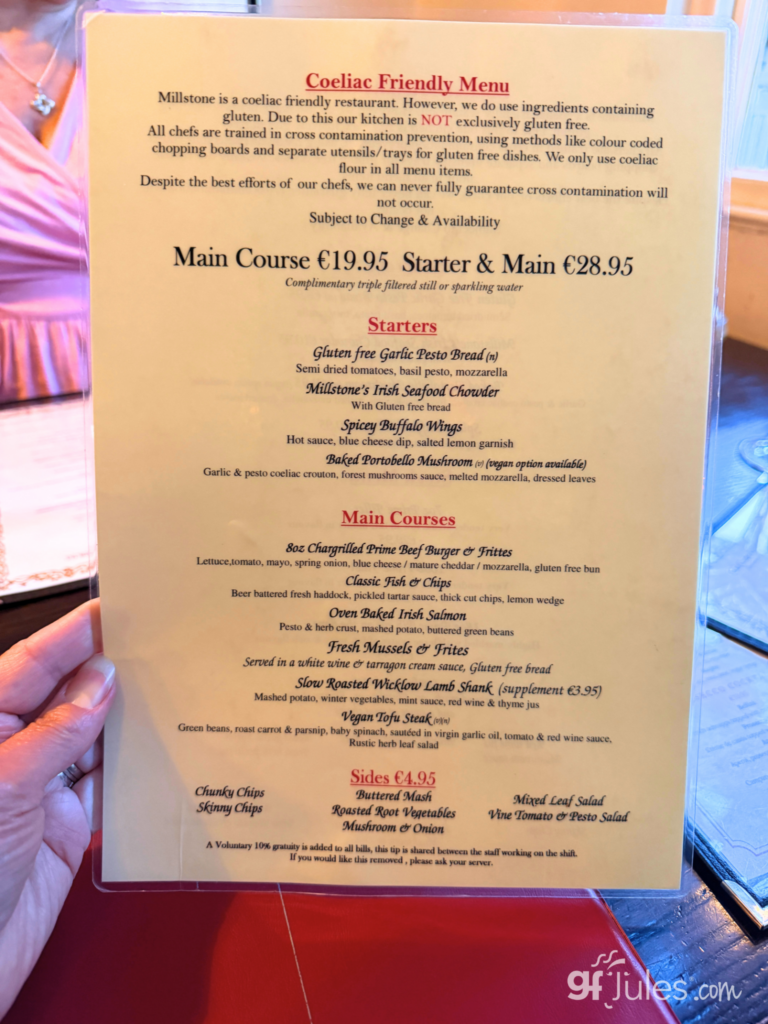
“Gluten Free” vs. “Coeliac Friendly”
This is one of my favorite lessons from traveling.
A menu saying gluten free tells me something about the food.
It doesn’t necessarily tell me everything I need to know about the kitchen.
If I have celiac disease, no matter where I’m traveling, I’m not just asking:
Does this contain wheat?
I’m asking:
Can you prepare this without gluten cross-contact?
That’s why I look for restaurants that demonstrate an understanding of coeliac disease rather than simply restaurants that happen to have a gluten free symbol on the menu.
The Coeliac Society of Ireland’s Eating Out Pledge is one useful sign because its program addresses how gluten free food is stored, prepared, cooked and served.
Still, I always communicate my needs directly, no matter what country I’m in.
How I Search for Gluten Free Restaurants in Dublin
I typically start my search on Find Me Gluten Free app and the Gluten Dude app. (I love the Gluten Dude app because it’s actually vetted by Gluten Dude — a celiac!). Then I use Google Maps to hone my search by my location to make it even more convenient, and I often find many more options, though the dedicated gluten-free ones are always listed in the other apps.
This is the part I really want you to remember.
Don’t search only for “gluten free restaurants.”
When you find a restaurant that looks promising, look at its actual menu. That’s why when I leave Google reviews I try to always add a photo of the menu as well. Also read the most recent reviews. This is the same strategy I’ve used successfully in Amsterdam, Paris, London and other cities (use the search bar on this site to read about traveling in many other countries gluten free.)
The key is to read the reviews, not just look at the star rating. Look for comments from people who actually have celiac disease.
Did the restaurant understand cross-contact?
Was there a dedicated fryer?
Did the staff know what was safe?
Was gluten free bread prepared separately?
Did someone report getting sick?
Was the restaurant still offering the same gluten free options recently?
Those details are much more valuable to me than a restaurant simply having a five-star rating.
Use the Coeliac Society of Ireland, too
The Coeliac Society of Ireland is another excellent resource because its information is specifically geared toward people with coeliac disease rather than general gluten-free diners.
Its Eating Out Pledge identifies businesses that have completed the Society’s gluten-free training and agreed to specific criteria for safely preparing and serving gluten free food.
That’s a very different level of information than simply typing “gluten free restaurant Dublin” into a search engine.
Here’s How to Use Google Maps
Google Maps is particularly useful when you’re already out exploring.
Search:
“gluten free near me” or “gluten free restaurant” when you’re on the map open to your current location.
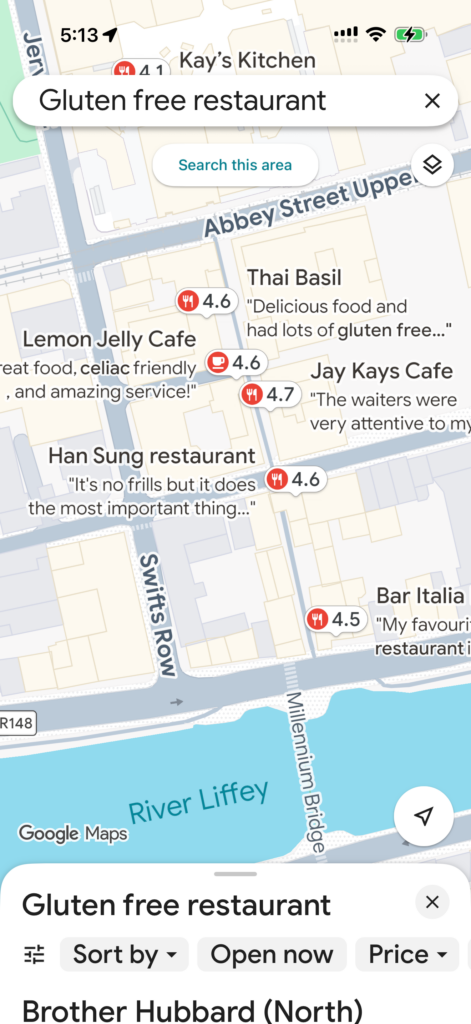
Then look at the current menu and recent reviews.
This is always where I start if I don’t already have a saved restaurant that I researched in advance.
Ask These Questions Before Ordering
If you’re traveling with celiac disease, I recommend having a short mental checklist.
I ask:
Is this gluten free?
Then, depending on the food:
Can you prepare it separately?
Is the fryer shared with foods containing gluten?
Is the toaster shared?
Does the sauce contain wheat, barley, or flour?
Can you use clean utensils and preparation surfaces?
You don’t need to deliver a ten-minute lecture on celiac disease.
But you do need to make it clear that even a small amount of gluten is a problem for you. In Ireland, I found this to be much easier than most countries, unless the servers were not native to Ireland, and then, unfortunately, their level of understanding of coeliac varied widely.
If the server doesn’t understand what you’re asking, that’s useful information, too!
Gluten Free Food in Irish Cuisine
You might assume that traditional Irish food would be a nightmare for someone who can’t eat gluten.
After all, we’re talking about bread, potatoes, gravy, battered fish, pub food and plenty of baked goods.
But potatoes are your friend, and Irish cooking also includes plenty of naturally gluten free foods:
- meat
- fish
- seafood
- potatoes
- vegetables
- eggs
- dairy
- rice
- fruit
The problem is often what gets added to those naturally gluten free foods.
Gravy can contain flour.
Soups can be thickened with flour.
Fried foods may be coated with wheat flour or breadcrumbs.
Sauces can contain gluten.
And a dish that starts out naturally gluten free can become unsafe through preparation.
So don’t just look at the main ingredient. Ask about the entire dish, and of course about any fryers.
Gluten Free Fish and Chips in Ireland
This was one of the pleasant surprises for me. I was determined to find somewhere to get safe gluten fish and chips in Dublin, and it turns out that I had my pick of places! There were several reportedly coeliac-safe fish and chips places I found, and I dined at two of them myself. Such a treat!
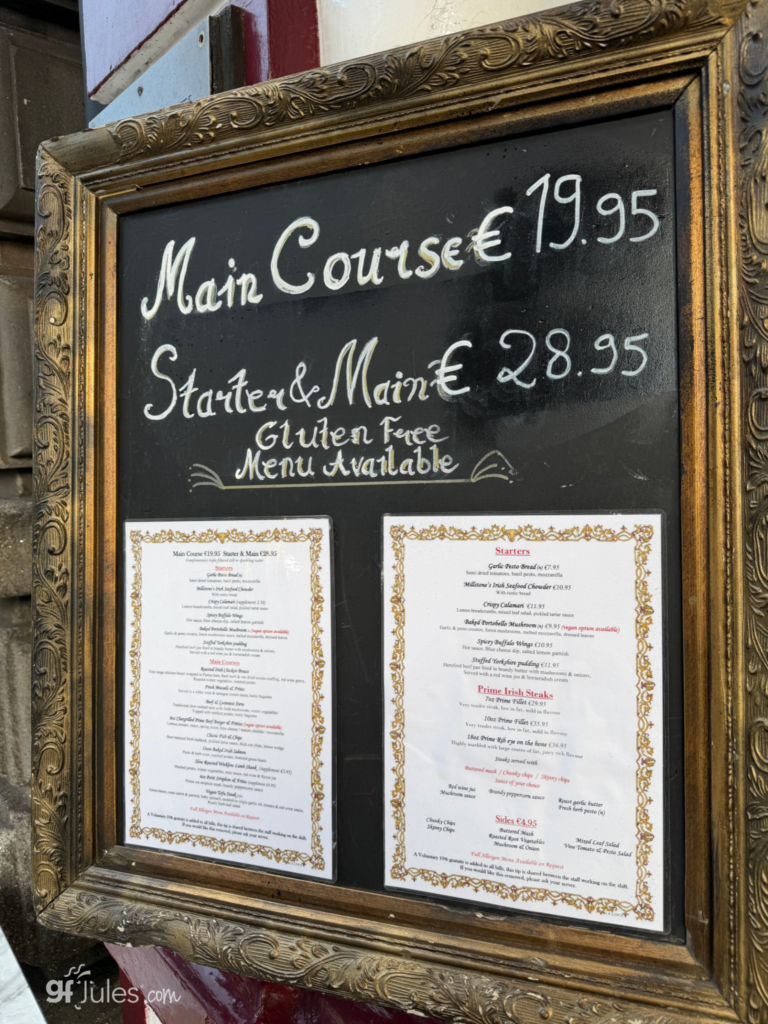
At Millstone in Dublin, for example, I found a dedicated coeliac menu with substantial choices, including gluten free versions of Irish favorites. The restaurant is one of the places I’ll be highlighting in this post because it demonstrates exactly what I mean by a restaurant that makes gluten free dining feel normal rather than like an inconvenience.
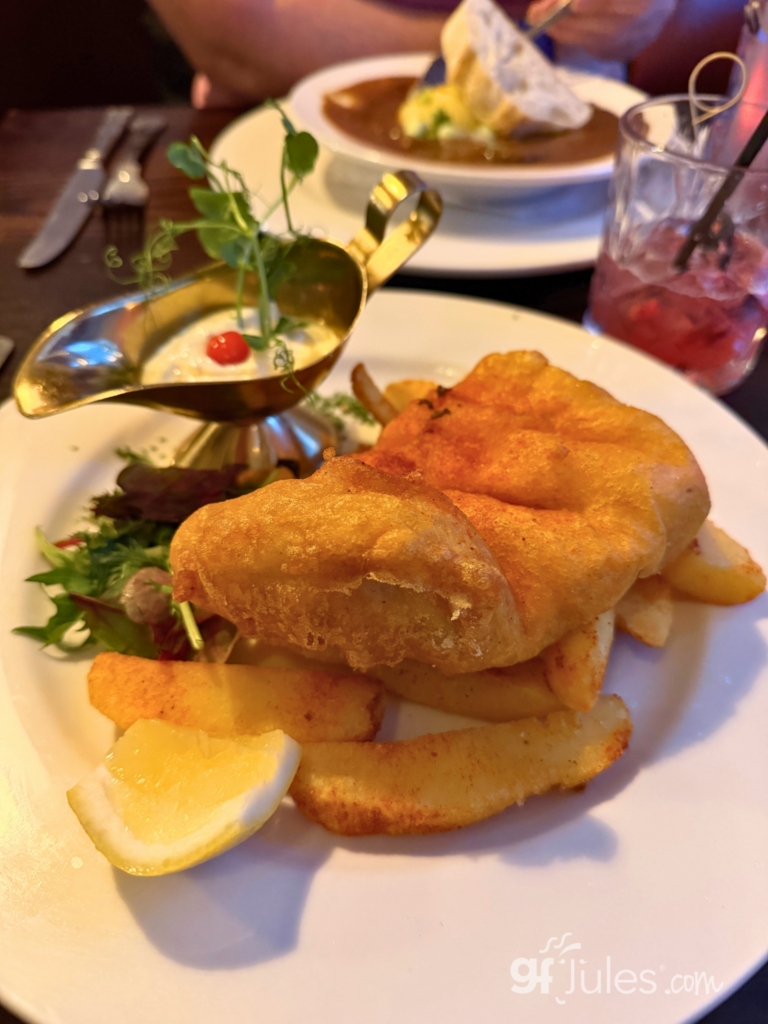
The important thing to remember with fried food is to ask about the fryer.
This may go without saying, but I’ll say it again anyway: a gluten free batter isn’t enough if the fish is dropped into a shared fryer with regular breaded food. At Millstone, all their floured, breaded and battered foods were prepared using gluten free flour, so the fryer was safe.
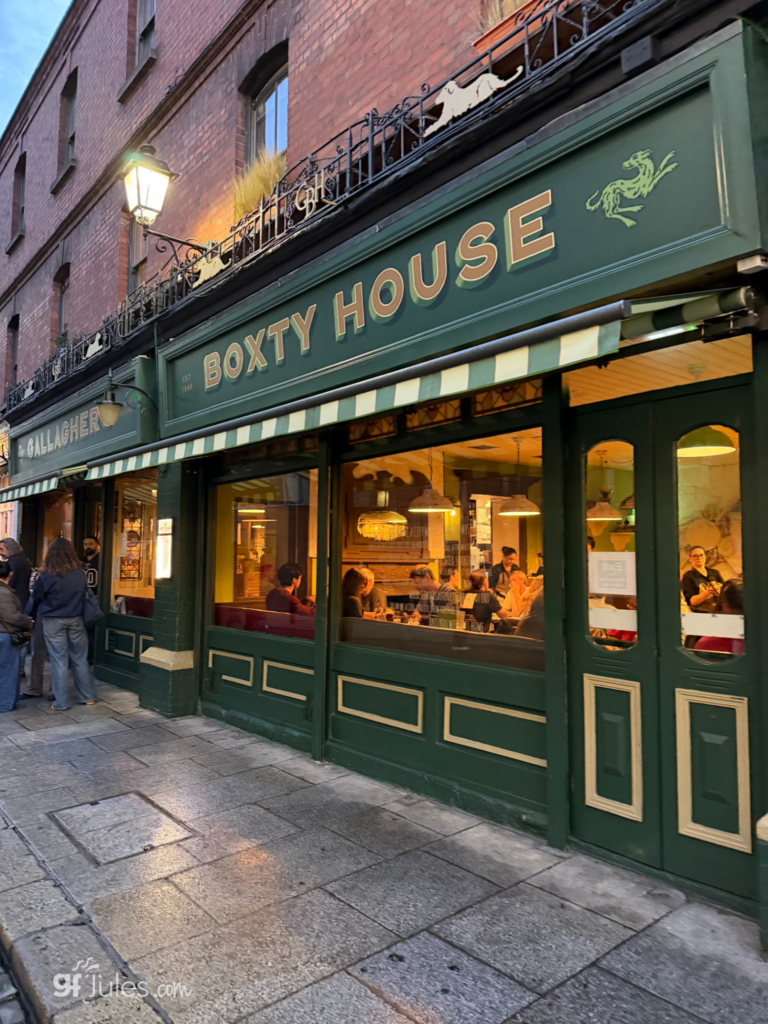
Gallagher’s Boxty House: Gluten Free Irish Food
One of the things I wanted to do in Dublin was eat food that actually felt Irish — not simply find another restaurant serving a gluten free version of something I could get anywhere.
That’s where Gallagher’s Boxty House came in.
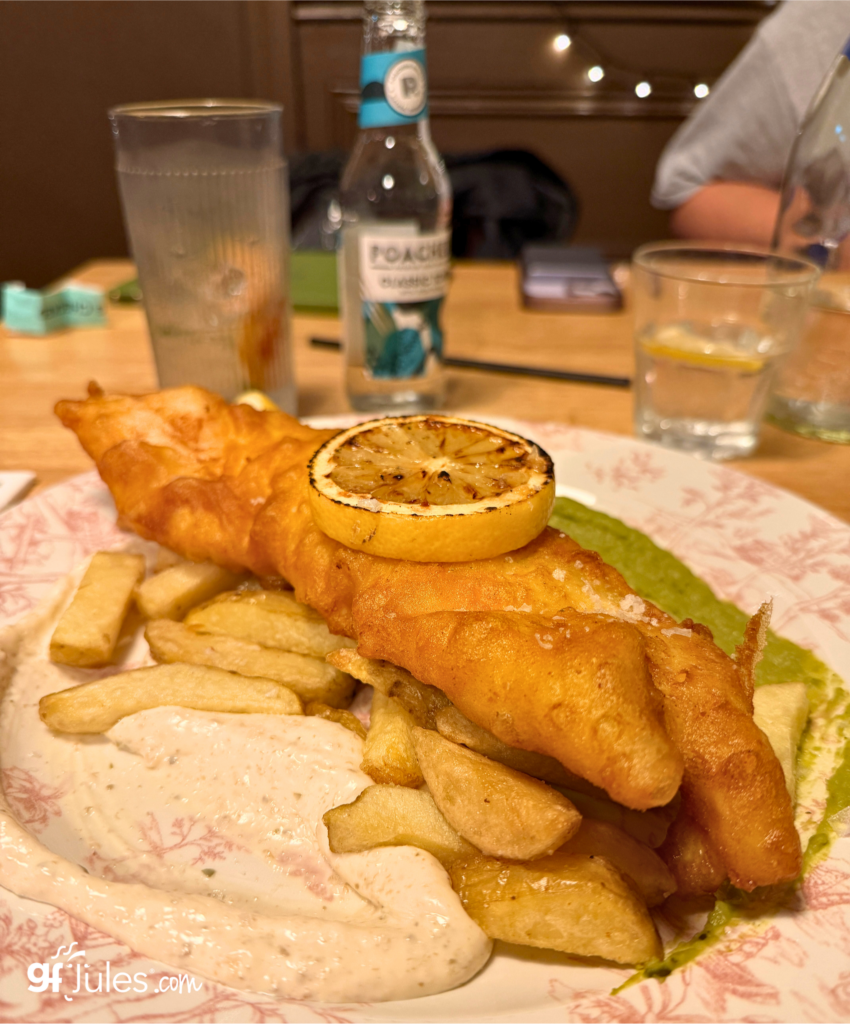
Boxty is a traditional Irish potato pancake, and discovering gluten free ways to enjoy traditional Irish food is one of the things that makes travel so much more fun.
This is the kind of restaurant I look for when traveling:
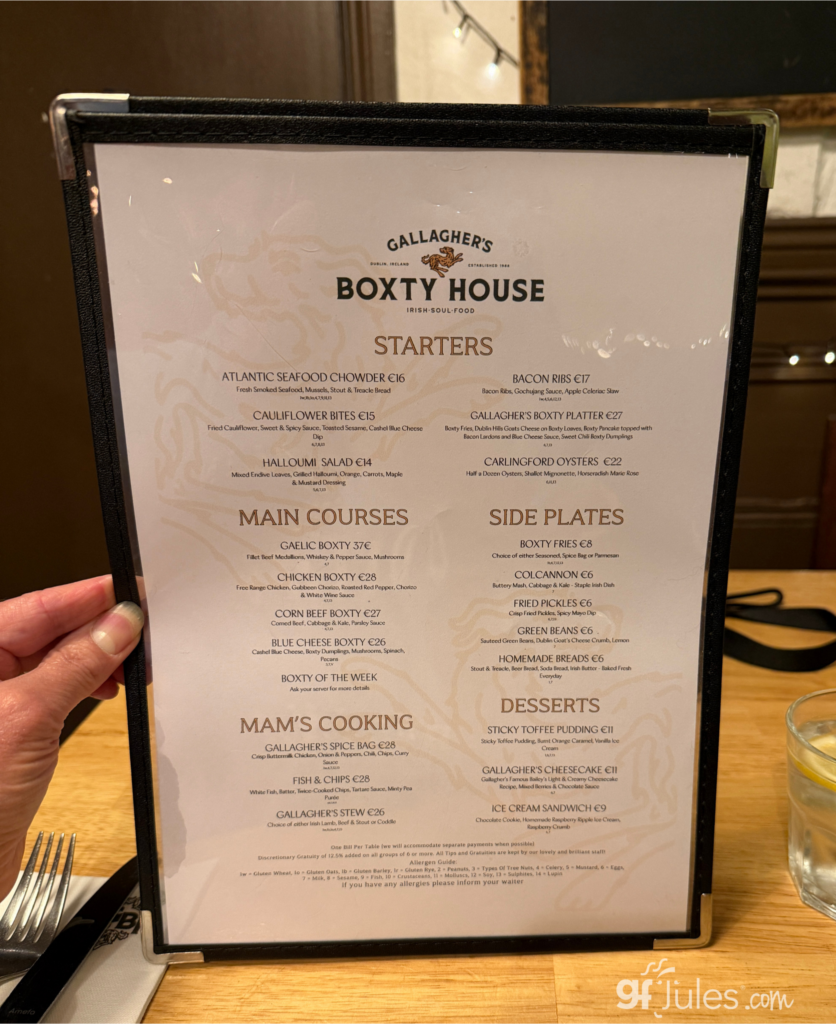
Not just “a restaurant with a gluten free menu,” but a place where I can experience the local food culture. The gluten free fish and chips here were exceptional. I was wishing I had a second stomach so I could have finished my meal, it was that good. By the way, reservations are highly recommended here!
Gluten Free Cafes and Bakeries in Dublin
Breakfast and coffee can sometimes be harder for gluten free travelers than dinner.
That’s because cafes are often full of shared equipment:
- toasters
- pastry cases
- cutting boards
- crumbs
- shared butter and spreads
So I pay particular attention to how a cafe handles gluten free food.
Coral Cakes is a dedicated gluten-free bakery in Dublin.
Jay Kay’s Cafe and Lemon Sugar Cafe were two of the places I tried for breakfast on this trip.
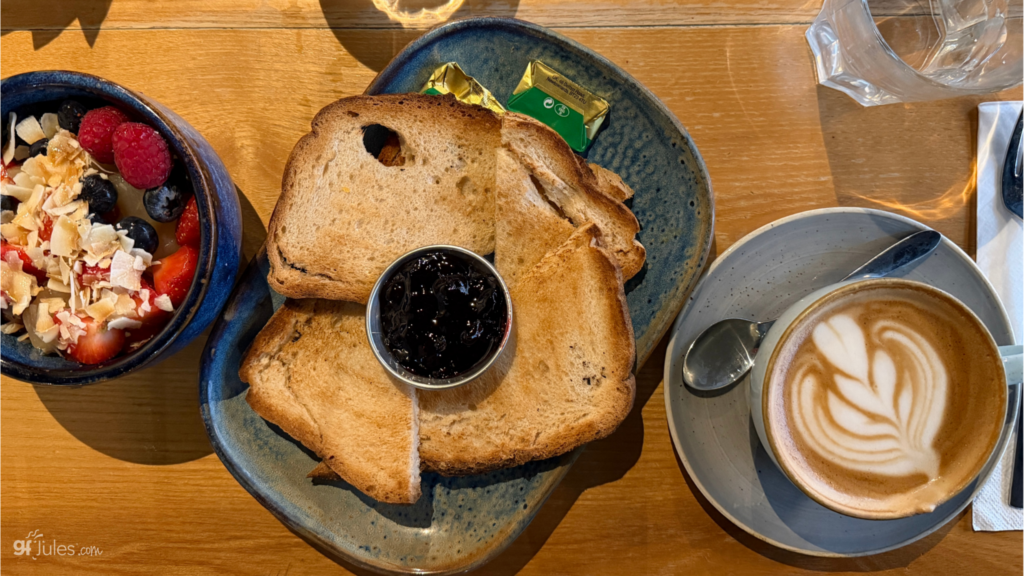
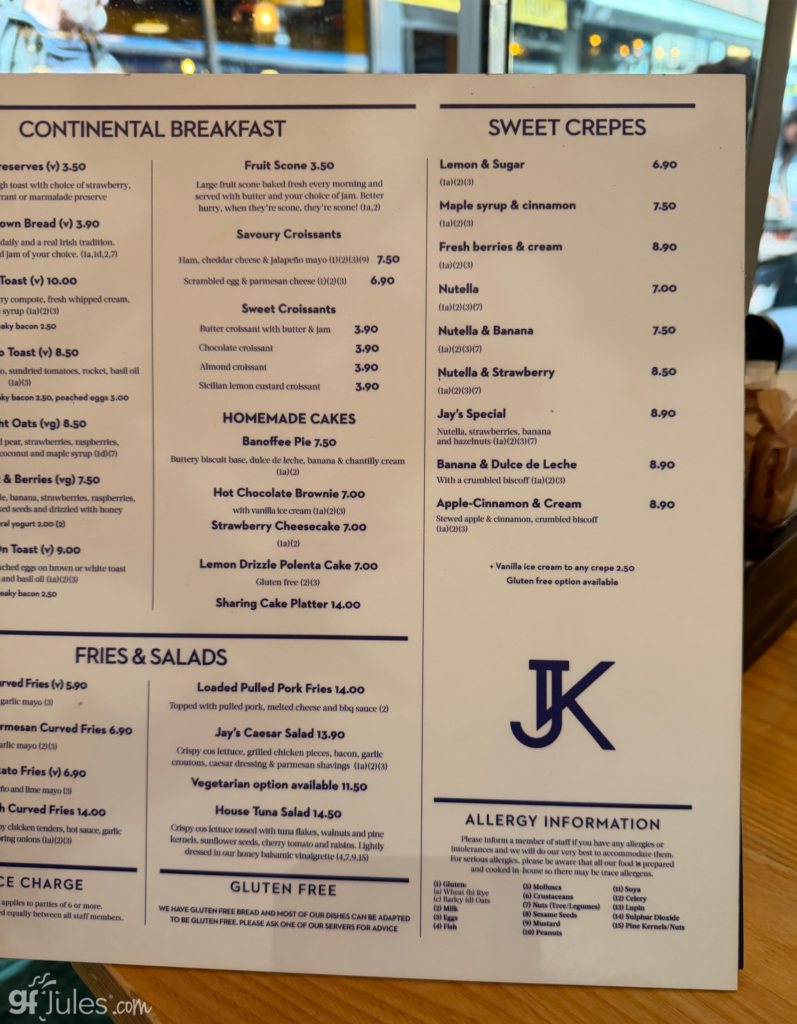
Jay Kay’s Cafe offers a really impressive assortment of gluten-free choices, from gluten free toast and gluten free overnight oats to gluten free crepes of all kinds.
I’m not the biggest fan of the gluten free buckwheat crepes that are ubiquitous in mainland Europe (when ordering a gluten-free crepe, that is), so I was pleasantly surprised by how light their gluten free crepes were. Very much more similar to the ones I make at home. The lemon and sugar crepe was particularly delicious!

But the most impressive part of this menu was its extensive allergen labeling, which I found informative and reassuring. The (1) sub (a) – (d) tells the customer exactly what the gluten source is if there is gluten in a dish — very helpful! This type of allergen labeling was not unique to Jay Kay’s menu, as similar call-outs could be found on many menus in and around Dublin, but it this one was super easy to read and understand.
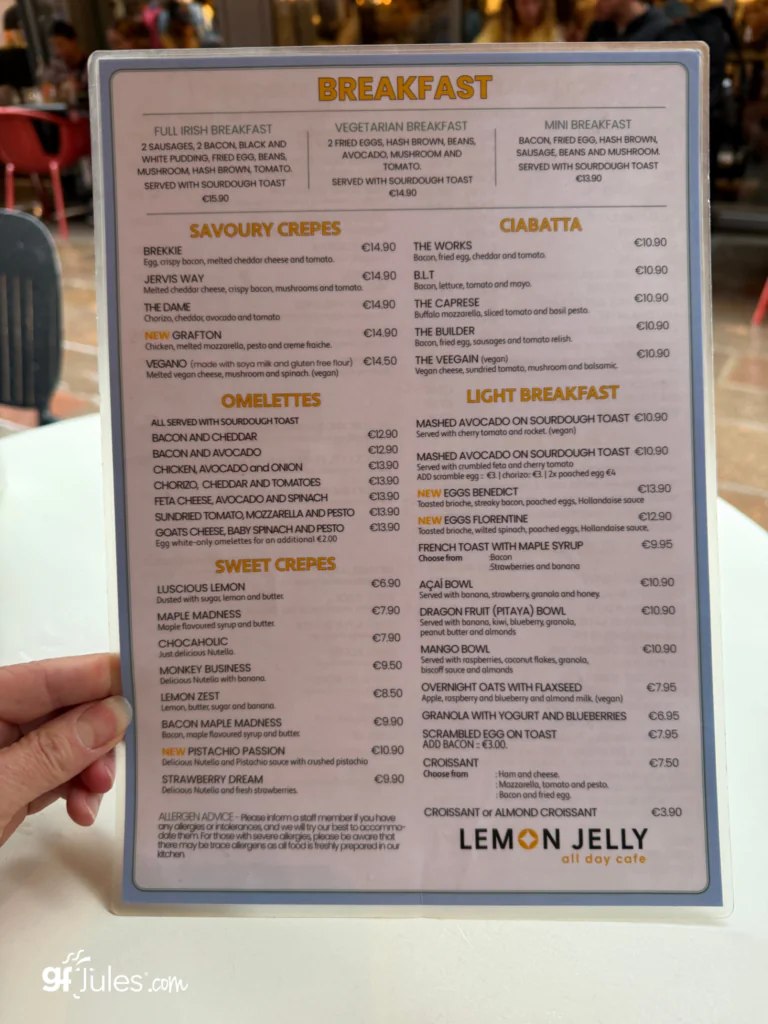
Across the way was another cafe called Lemon Jelly which also offered a decent assortment of gluten free breakfast and brunch fare. I preferred the dishes I sampled from Jay Kay’s, but it was nice for another option to have vegan cheese in a gluten free crepe, for example.
And again, don’t assume that because a cafe offers a gluten free muffin or slice of cake that everything is automatically safe for someone with celiac disease.
Ask.
Look.
Listen to the answer. Use common sense in deciding whether to trust the staff or not.
Gluten Free at Aviva Stadium
One of my favorite gluten free travel surprises was finding coeliac-friendly food at Aviva Stadium.
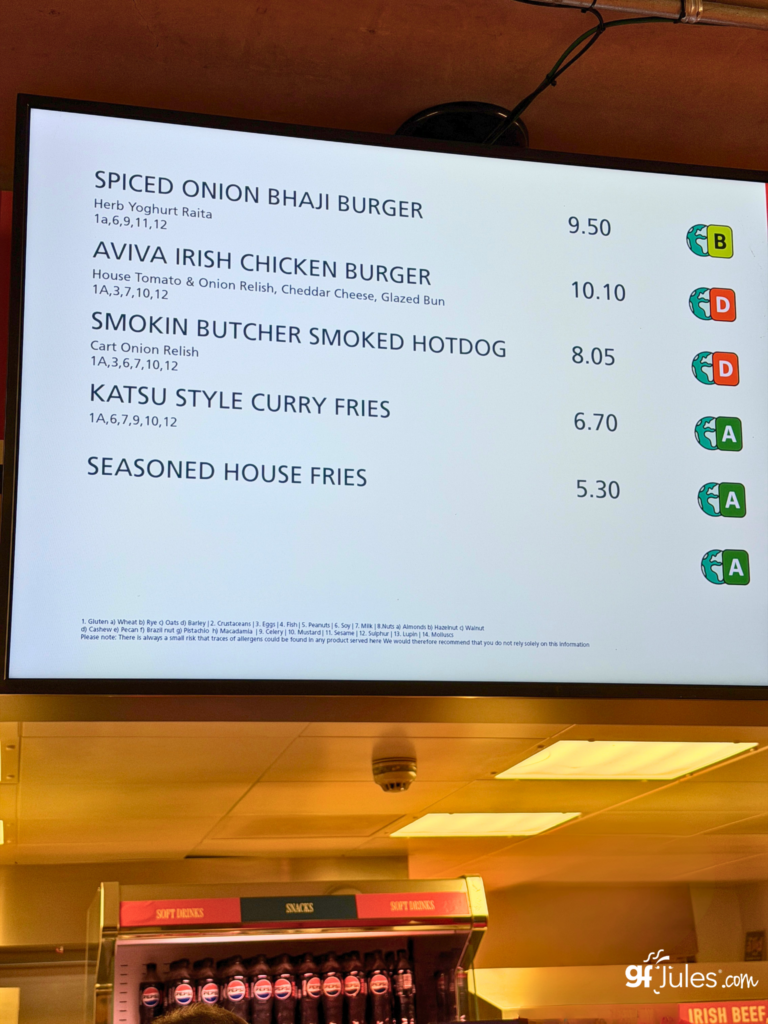
Stadium food is one of those things that can be particularly frustrating when you’re gluten free.
You may be able to find something that doesn’t contain obvious gluten, but finding food that is actually prepared with cross-contact in mind is another matter.
So being able to find a gluten free option — fries!!! — while attending an event made me appreciate just how much gluten free awareness has become part of everyday life in Ireland.

Gluten Free in Kilkenny
If your Ireland trip takes you beyond Dublin, don’t assume that gluten free options disappear the moment you leave the capital.
I found gluten free choices in Kilkenny, too (a short day trip, and well worth it!).
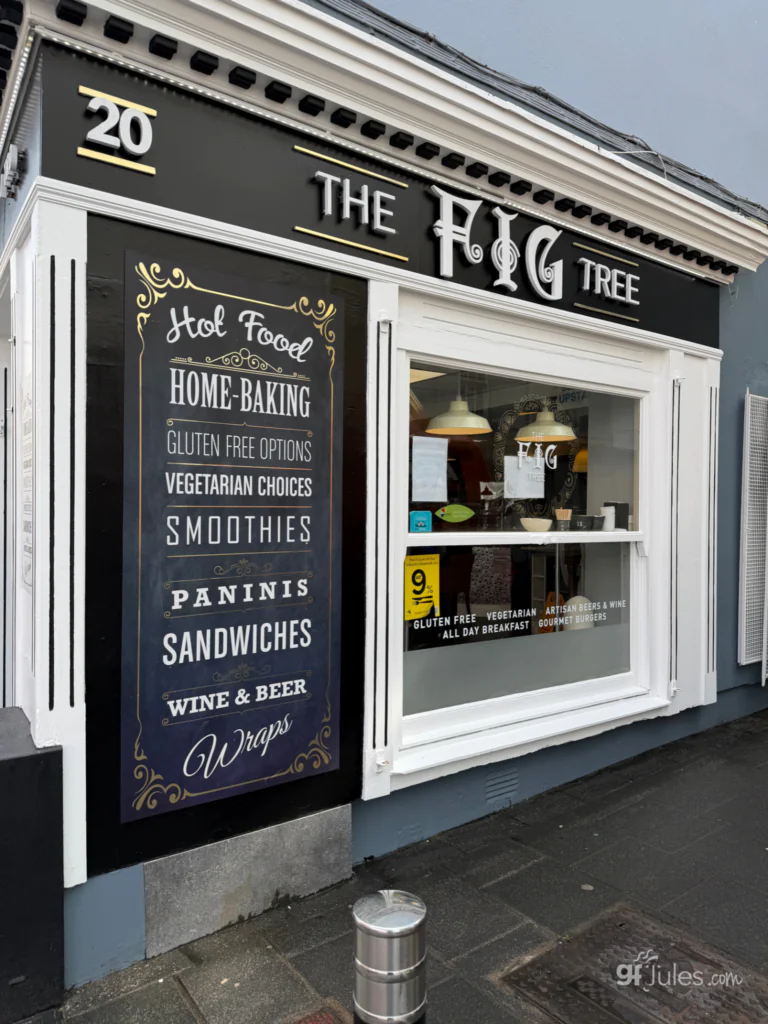
One stop worth mentioning is The Fig Tree.
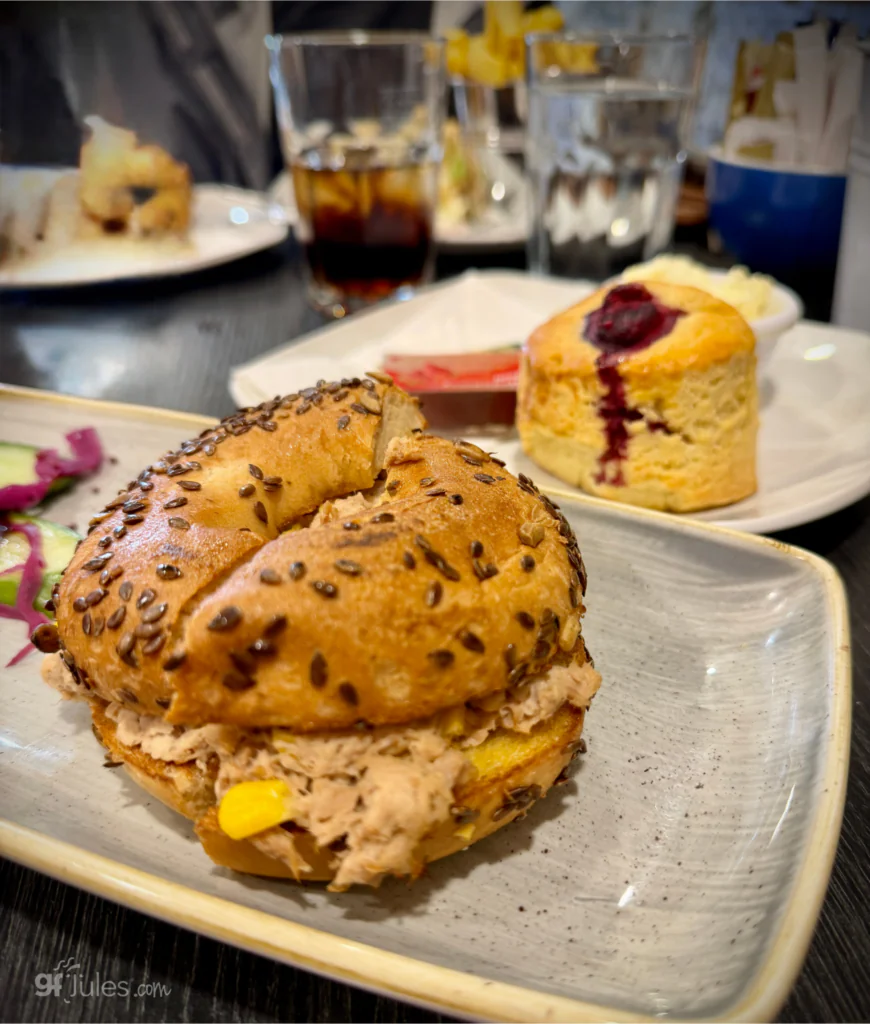
While the menu with gluten-free offerings wasn’t extensive, they had gluten-free options for many sandwiches, including this lovely bagel sandwich which I must say was quite good! I polished the whole thing off — something I rarely do unless I made the gluten free bagel myself, homemade. 😉
This is another reason I don’t like to create travel posts that are simply a list of “the 20 best gluten free restaurants in Dublin.”
Ireland is bigger than Dublin.
If you know how to search, ask questions and recognize the signs of a restaurant that understands coeliac disease, you can continue eating safely as you travel.

Gluten Free Beer in Ireland: Read the Label Carefully
And now for an important beer warning for Americans traveling gluten free in Ireland.
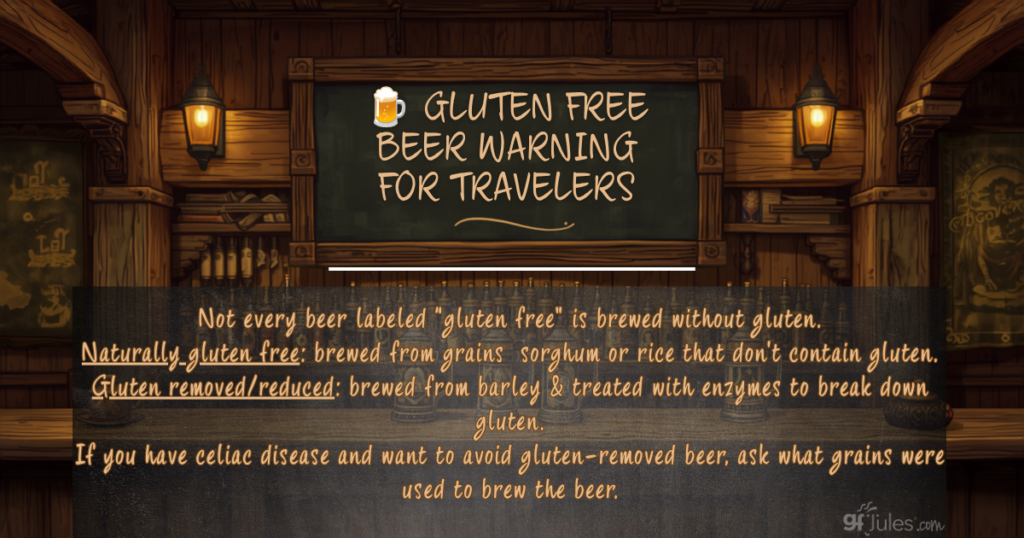
You may see quite a few beers labeled “gluten free” in Ireland and elsewhere in Europe that I would not personally consider appropriate for someone with celiac disease.
Why?
Because there are two very different ways to make a beer that may be marketed as “gluten free” in other countries.
Naturally Gluten Free Beer
The first is beer that is brewed from grains that don’t contain gluten in the first place — such as sorghum, rice or other naturally gluten free grains.
That’s the type of gluten free beer I look for.
The gluten isn’t removed. It was never there to begin with.
Gluten-Reduced or Gluten-Removed Beer
The second category is much trickier.
Some beers are brewed using barley, which naturally contains gluten, and then an enzyme is added during processing that breaks the gluten proteins down into smaller fragments.
The resulting beer can test below the legal gluten-free threshold under European rules and may be labeled “gluten free.”
But here’s the problem for someone with celiac disease:
The gluten hasn’t simply disappeared. It has been enzymatically broken down.
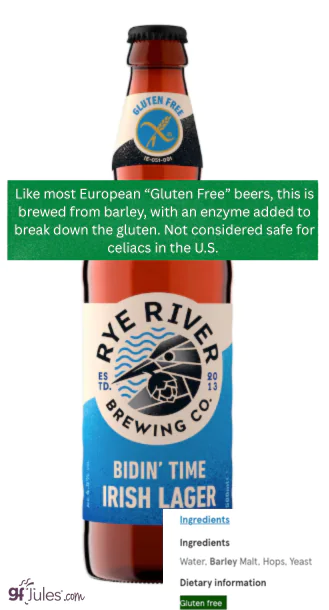
And that’s where the science gets complicated.
The Celiac Disease Foundation, the Gluten Intolerance Group of North America and others have cautioned that gluten-removed beers may not be safe for people with celiac disease because the testing methods used for fermented and hydrolyzed products may not reliably detect all of the potentially immunogenic gluten fragments. Research has also found that some people with celiac disease can have an immune response to gluten-removed beer.
This is one area where European labeling and U.S. celiac advice don’t always line up neatly.
Coeliac UK notes that both naturally gluten-free beer and gluten-removed beer made from barley can legally be labeled gluten free if they contain no more than 20 ppm gluten; a barley-based gluten-removed beer must also declare that it contains barley.
So when you’re sitting in an Irish pub and someone tells you:
“Don’t worry — it’s gluten free!”
I recommend asking how it was made or what grains were used to brew it.
If you have celiac disease and want to stick with beer made from naturally gluten free grains, don’t assume that every beer labeled gluten free meets that definition.
What I Do
When I’m traveling, I look for a beer that is naturally gluten free rather than one brewed from barley and treated with enzymes.
If you’re unsure, ask:
“Is this beer brewed from gluten-free grains, or is it a gluten-removed beer made from barley?”
That one question can save you a lot of confusion.
And if the bartender doesn’t know the answer?
Choose something else.
There are plenty of naturally gluten free beverage options in Ireland, including cider, wine and spirits.
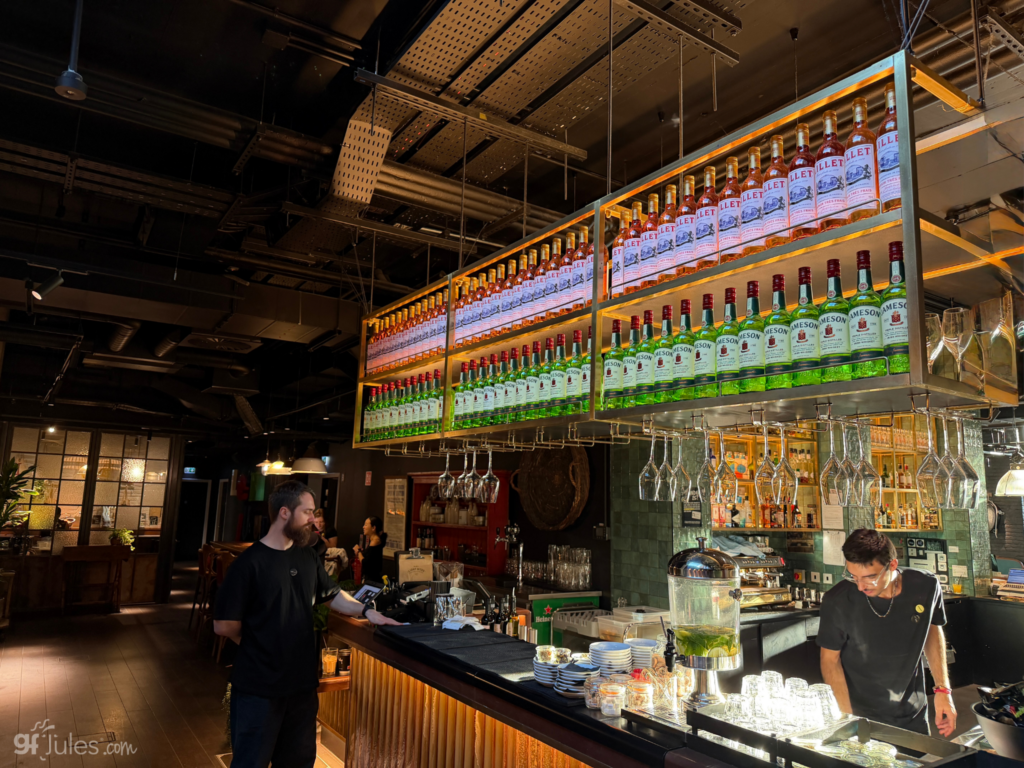
Don’t Let the Irish Label Fool You
This is one of those situations where “gluten free” doesn’t necessarily mean the same thing to every traveler.
Ireland follows European gluten-free labeling rules, under which a product can be labeled gluten free when it contains no more than 20 ppm gluten.
But for someone with celiac disease who prefers to avoid barley-based, gluten-removed beer, you need to look beyond the words “gluten free” on the beer menu.
This is especially important because you’re traveling internationally and may encounter brands and brewing practices that aren’t familiar to you.
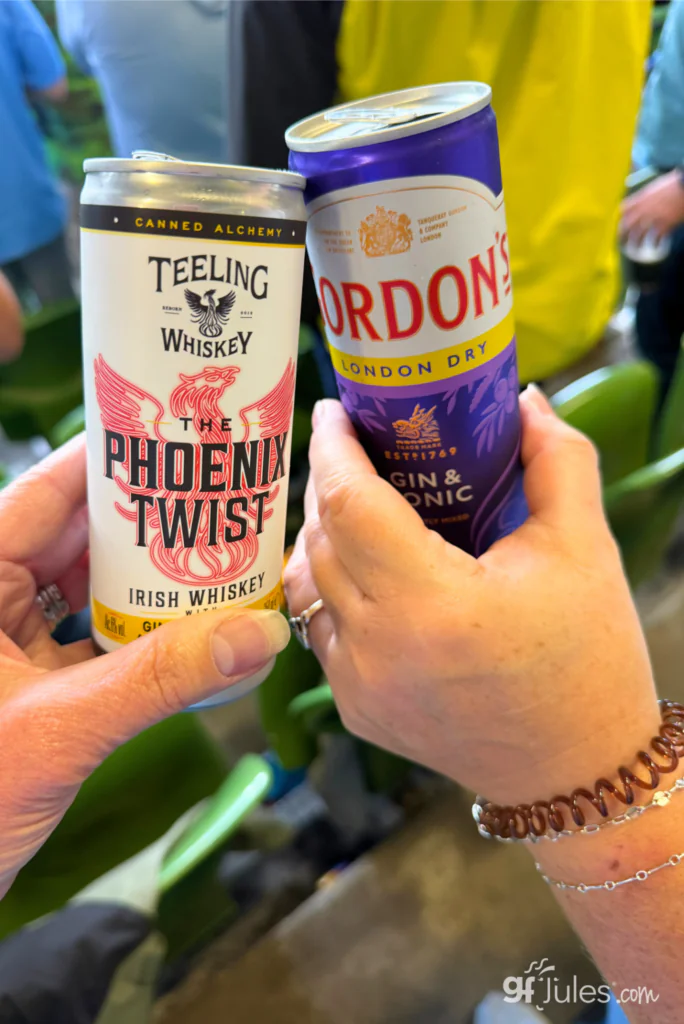
My advice? When in doubt, stick with naturally gluten free beer — or enjoy a cider, mixed drink, or glass of wine instead.
And if you’re a beer lover, don’t worry: you don’t have to give up the experience of having a drink in an Irish pub. You just need to be a little more discerning about what’s in your glass. Don’t miss out on the pub experience just because you’re skipping the Guinness or the gluten-reduced beer, there’s plenty of fun to be had with a different type of drink in your hand. (And yes, distilled whiskey is gluten-free, but fun fact: Teeling Irish Whiskey makes an entirely corn-based whiskey, as well!)
Flying Gluten Free to Dublin on Aer Lingus
Now let’s talk about getting there.
For a U.S. traveler, Aer Lingus makes Dublin particularly convenient because it offers direct transatlantic flights from several U.S. cities.
And yes, you can request a gluten free meal in advance.
Aer Lingus calls its gluten free special meal a GFML — Gluten Intolerant Meal. The airline says this meal excludes wheat, barley, oats and rye. Special meals are available on transatlantic flights and must currently be requested at least 48 hours before departure.
So:
ORDER YOUR SPECIAL MEAL IN ADVANCE.
Do not assume that telling the flight attendant when you board will magically produce a gluten free meal, because they won’t.
And here’s where I have some good news — and some less-good news.
The Good
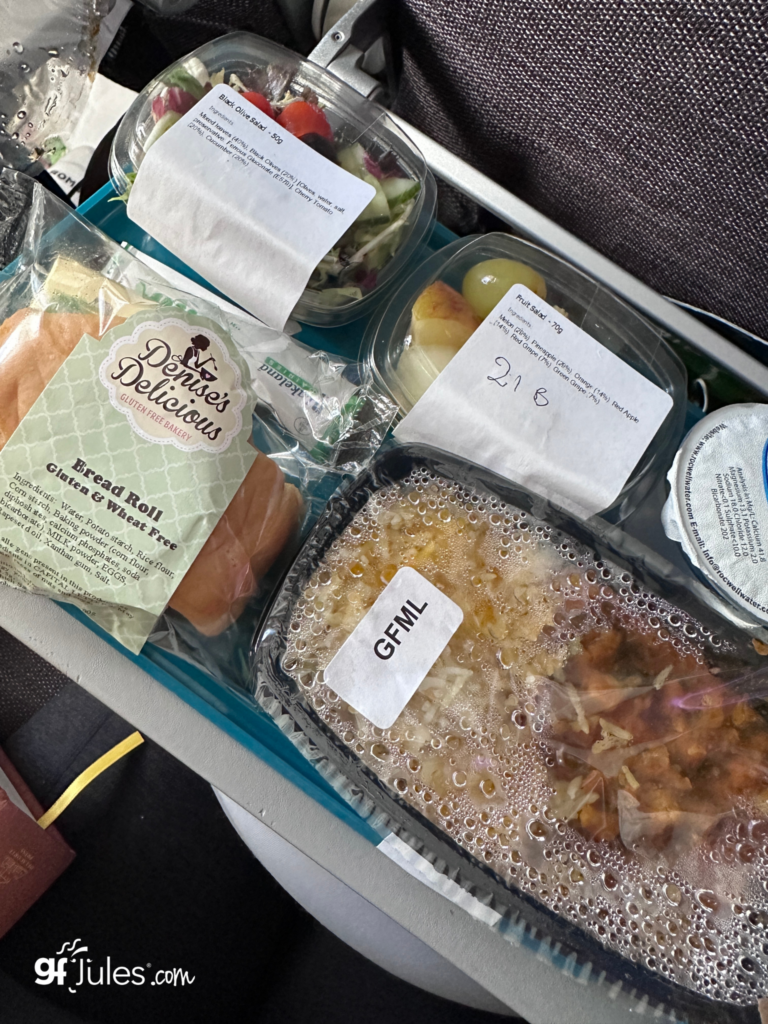
Having a special meal waiting for you on a transatlantic flight is reassuring. Knowing you have something on order, rather than hoping something on the standard menu happens to be safe, is a good feeling.
And Aer Lingus specifically describes the GFML as excluding wheat, barley, oats and rye.
The Not-So-Good
Ordering a gluten-free meal is great, but much like other airlines, when ordering from Aer Lingus, gluten-free is the ONLY dietary specification you can make once you’ve chosen it.
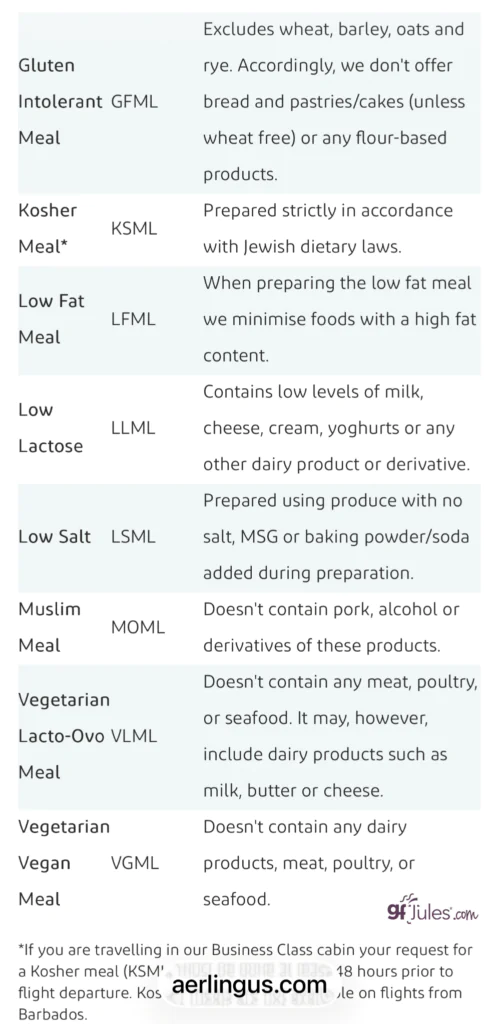
In other words, you can only choose “Gluten Intolerant Meal,” you can’t also select “Vegetarian” or “Vegan,” for example. So if you have any other dietary restriction beyond celiac (many of us do), you might not even be able to eat your gluten free meal! If you’re like me and you cannot tolerate dairy, there is no way to indicate that when I ordered the GFML. Consequently, my gluten free Aer Lingus meals contained plenty of dairy.
But beyond that, I was also served dishes that didn’t contain any ingredient information at all! So I could not eat them because I didn’t know or trust what was in them. I have been served gluten in a gluten-free meal before, not to mention that I need to know if there is dairy in the dish (and I also don’t eat meat), so I’m not eating anything without ingredients. Hard stop.
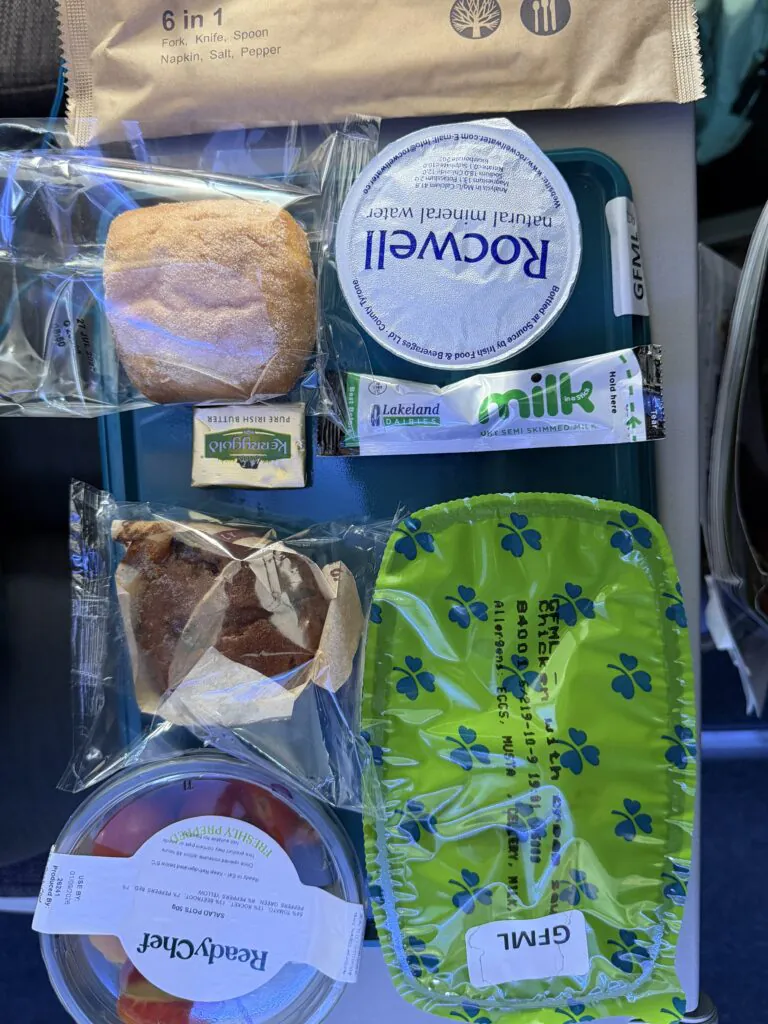
At least there were a couple labeled items I could eat, so that was a small win.
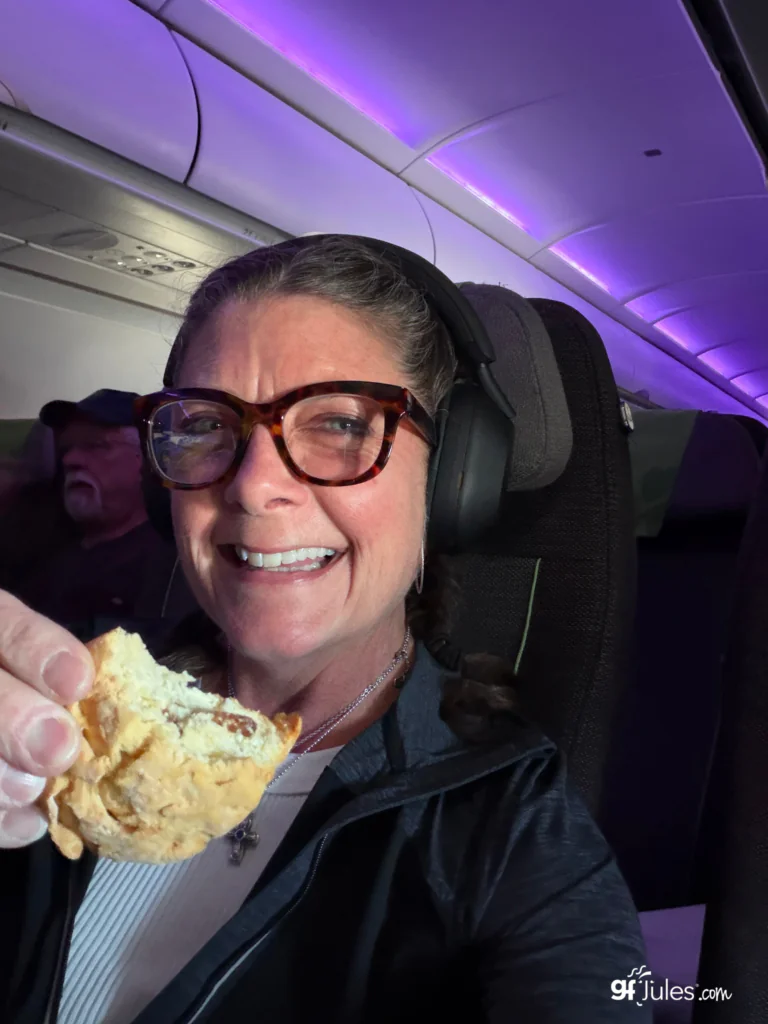
So I still always recommend carrying your own gluten free snacks.
Always.
Even when I have ordered a special meal, I like knowing that I have something I actually enjoy eating in my bag.
A few gluten free bars, crackers, nuts, or homemade gluten free muffins can turn a disappointing airline meal into a minor inconvenience instead of a travel emergency.
My Best Advice for Flying Gluten Free
Order the special meal.
Confirm it is on your reservation.
Tell the flight crew you’ve ordered a special meal. Aer Lingus specifically recommends letting the cabin crew know that you’ve ordered a special meal once you’re on board.
Bring backup food anyway.
And remember: an airline special meal is not a substitute for being your own advocate.
The Secret Weapon: Flying Home Through Dublin
Here’s another reason I love Dublin for a short European getaway:
U.S. Preclearance.
Dublin Airport has a U.S. Customs and Border Protection preclearance facility.
That means that when you fly directly from Dublin to the United States, you complete U.S. immigration, customs and agriculture inspections before you board your flight in Dublin.
And when you land in the United States, you’re treated as a domestic arrival.
That’s a BIG deal.
Instead of landing in the U.S. and then:
- getting off the plane,
- standing in the immigration line,
- collecting your luggage,
- going through customs,
- rechecking your bag for a connection,
- and then finding your next gate…
you’ve already completed that process in Dublin.
Dublin Airport describes U.S.-bound passengers who complete preclearance as arriving in the United States as domestic passengers.
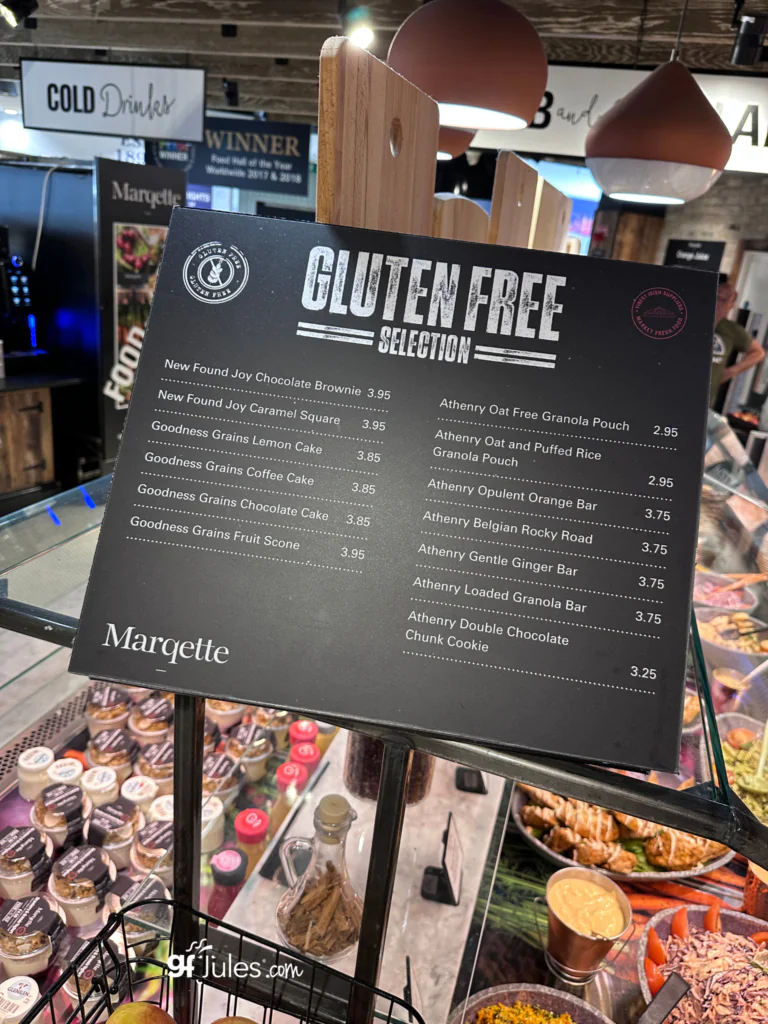
(Dublin Airport also has lots of gluten-free snack options!)
Why this matters for a short trip
This makes Dublin particularly appealing for Americans who don’t have two weeks to spend in Europe.
You can take a relatively short trip to Ireland without feeling like you’re spending half your vacation navigating airports.
And if you’re connecting onward within the United States, that preclearance can make the return journey considerably easier.
Just remember that you still need to allow plenty of time at Dublin Airport. Dublin Airport recommends arriving about three hours before a long-haul flight, and the preclearance process takes place after security in Terminal 2.
Don’t Forget Your Gluten Free Travel Snacks
Even in a country as gluten free friendly as Ireland, I don’t travel empty-handed.
My rule is simple:
Never rely on your next meal.
I keep a few emergency gluten free foods in my carry-on so that a delayed flight, missed reservation, closed kitchen or unexpected change of plans doesn’t turn into a gluten free crisis.
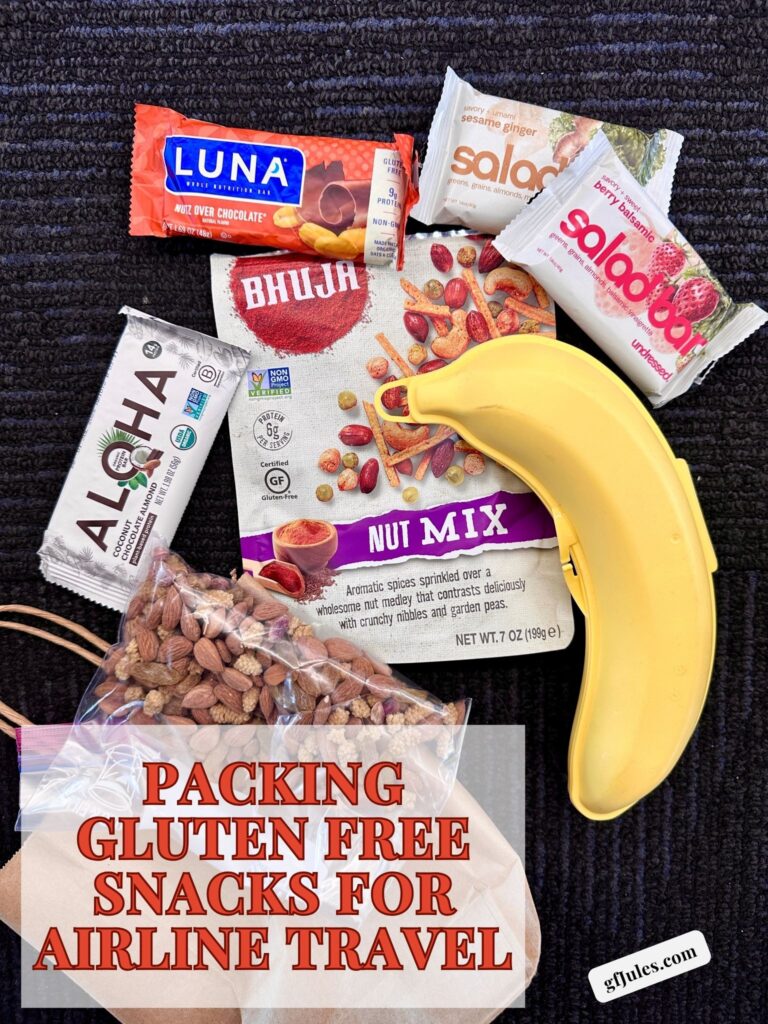
For me, that usually means gluten free bars, crackers, nuts or homemade gluten free baked goods.
It’s not because Ireland is difficult.
It’s because travel is unpredictable.
And being prepared means you can spend your time enjoying Dublin instead of worrying about where your next safe meal is coming from.

So, Is Dublin a Good Gluten Free Travel Destination?
Absolutely.
Dublin isn’t a magical gluten free bubble where you can stop asking questions.
You still need to advocate for yourself.
You still need to understand cross-contact.
You still need to check menus and ask questions.
But compared with many destinations I’ve visited, Ireland has an unusually strong awareness of coeliac disease and a surprisingly good infrastructure for gluten free travelers.
What impressed me most wasn’t simply the number of restaurants advertising gluten free options.
It was how often gluten free seemed to be treated as a normal part of accommodating diners, rather than an annoying special request.
That’s the difference.
And that’s why I’d happily go back.

My Gluten Free Dublin Travel Checklist
Before you leave home:
☐ Order your Aer Lingus GFML at least 48 hours before your transatlantic flight.
☐ Confirm the special meal is attached to your reservation.
☐ Pack emergency gluten free snacks.
☐ Save the Coeliac Society of Ireland as a resource.
☐ Research restaurants, but don’t rely on an old restaurant list alone.
☐ Read recent reviews from other people with coeliac disease.
☐ Look for the Coeliac Society’s Eating Out Pledge.
☐ Check restaurant menus before you go.
☐ Ask about shared fryers, toasters and preparation surfaces.
☐ Tell restaurant staff clearly: “I’m coeliac.”
☐ Enjoy Ireland!
Final Thoughts on Traveling Gluten Free in Dublin
If you’re considering Ireland but have been putting it off because you’re worried about eating gluten free, go.
Do your homework, bring some backup gluten free food, learn the local terminology, and don’t be afraid to ask questions.
But don’t let celiac disease keep you from experiencing Dublin.
Eat lots of potatoes.
Find the gluten-free boxty.
Order the fish and chips (gluten free, of course).
Enjoy lots of pubs, but most likely order something other than “gluten-free” beer.
Explore beyond Dublin if you can.
And most importantly, remember that the goal isn’t to find one perfect gluten free restaurant before you leave home. The goal is to learn how to recognize safe food wherever you go, and not to let being gluten free ever hold you back. That’s what makes gluten free travel freedom.
And Ireland makes finding that freedom a whole lot easier.













I spent a week in Dublin last year and it was wonderful and easy to find GF meals. Many areas have GF restaurants with safe food and staff trained in allergen prep. It was so nice to find so many places to eat. There was one restaurant that was 100% GF and that was fun to go to. A bit spendy but always an experience. I thought their airport was not very GF friendly tho.
It’s super easy to get to and from Dublin, too! So glad you enjoyed a lovely and safe week there, Sue! Do you remember the name of the 100% GF restaurant you dined at?
~jules